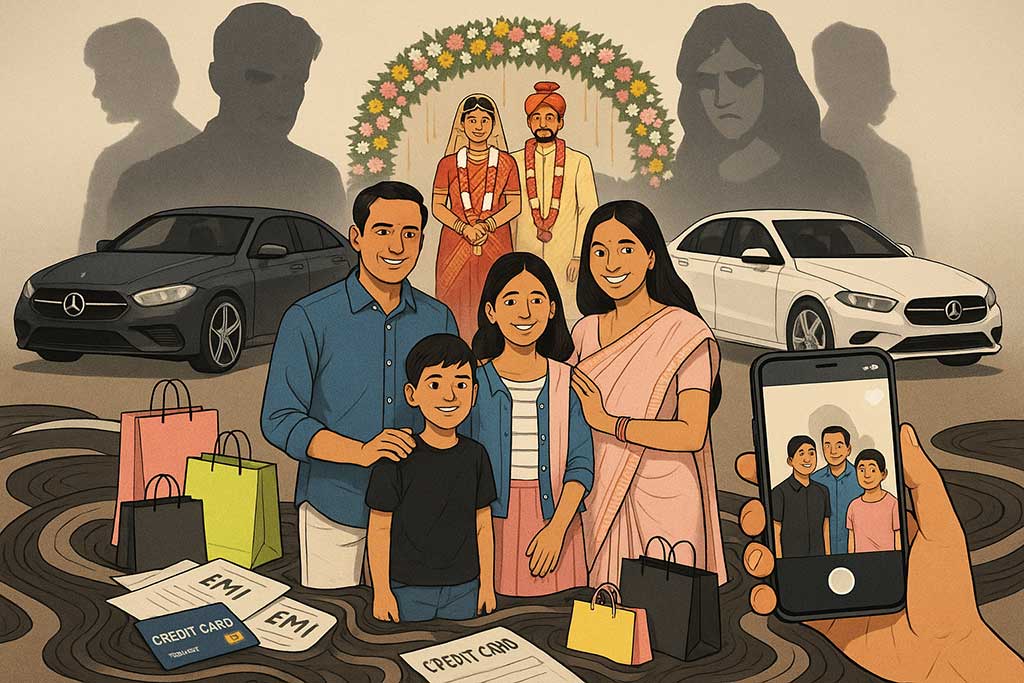
Middle-class families in India are caught in a cycle of overspending—lavish weddings, endless EMIs, and lifestyle loans that look harmless but slowly drain financial security. Household savings are shrinking, debts are growing, and the pressure to “look successful” is silently crushing future dreams. If this continues, long-term goals like home ownership, children’s education, and retirement will remain out of reach.
💸 “Debt is like quicksand. The deeper you step in, the harder it gets to come out.”
Across India, middle-class households are quietly drowning in debt. On the surface, people are living well-fancy weddings, brand-new cars, the latest phones. But behind the Instagram reels and wedding videos, many families are stuck in a silent financial crisis: living paycheck to paycheck, with debt piling up faster than savings.
The truth? Overspending isn’t just draining wallets—it’s draining peace of mind. And for most families, the harsh reality is this: trying to impress others is quietly destroying their future.
Why Overspending Feels Normal But Isn’t Safe
Ask anyone, and they’ll say: “Arre, sabhi karte hain, what’s the harm?”
That’s the problem. When debt becomes culture, people stop questioning it. Household savings in India have already fallen to just 18.1% of GDP, while debt has shot up to nearly 42% of GDP. And here’s the kicker
– more than half of that debt isn’t for assets like houses, but for lifestyle spending.
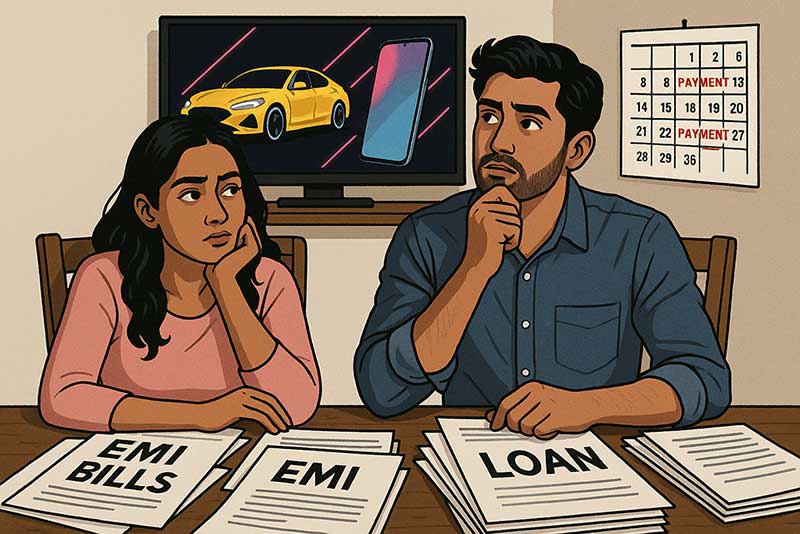
Every EMI may look small. ₹2,000 here, ₹5,000 there. But stack them together, and suddenly, half your salary is gone before the month even begins. That’s not financial freedom—that’s financial quicksand. And the scariest part? You don’t feel the danger until it’s too late.
👉 “Debt is like quicksand. The deeper you step in, the harder it gets to come out.”
Weddings and EMIs: The Silent Wealth Killers
Let’s talk about the elephant in the room: weddings.
The average Indian wedding costs ₹32–36 lakh. Some cross ₹1 crore. All for a “one-time event.” Families justify it as tradition, but reality check: that one day can destroy financial stability for years.
And it’s not just weddings. EMIs are everywhere—cars, vacations, even furniture. They come dressed as “no-cost EMIs” or “zero-interest deals.” But hidden fees, fine print, and the mental load of multiple payments turn this “convenience” into a financial trap.
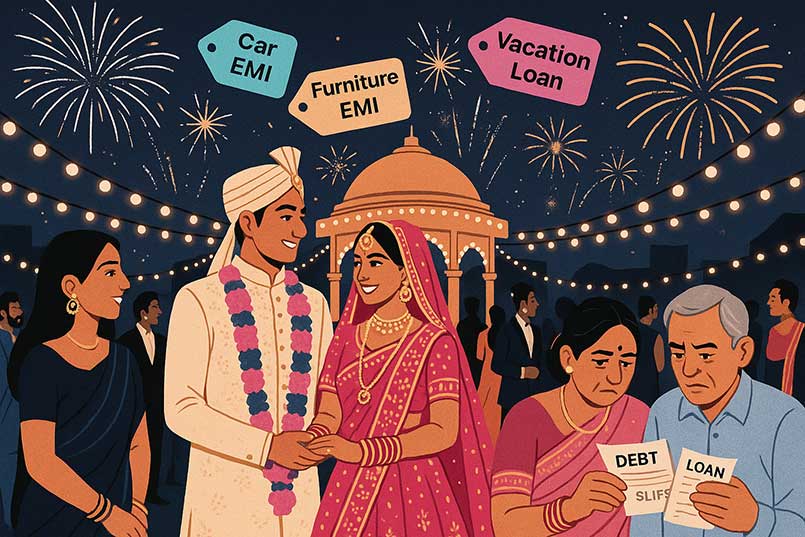
Imagine this: Your neighbor flaunts a new car on EMI, your cousin posts Maldives honeymoon pics on Insta (also on EMI), and you feel the FOMO. You join the race, not realizing it’s a treadmill—you keep running, but never move forward.
⚠️ “What feels like luxury today may become regret tomorrow.”
The Real Cost of Impressing Others
Here’s the bitter truth: most of the people you’re trying to impress don’t even care.
Neighbors will gossip for a week, relatives will click pictures at your wedding, and Instagram followers will double-tap your vacation photo. Then? They move on. But you’re stuck with the EMIs.
Overspending isn’t just a money issue—it’s a mental health issue. Constant financial stress leads to sleepless nights, arguments at home, and that heavy feeling in your chest every time the salary comes in (and goes out immediately).
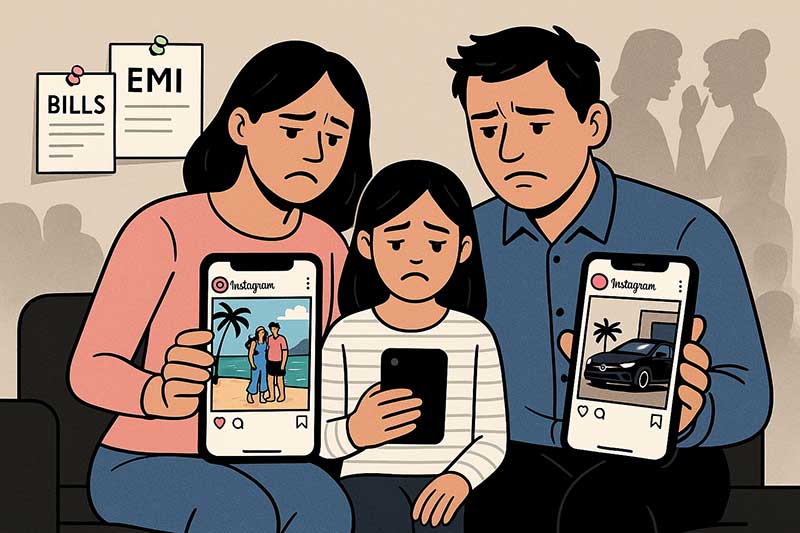
You can’t breathe easy because every rupee is already pre-booked for EMIs. That’s not living—it’s surviving.
👉 “Middle-class dreams are turning into middle-class nightmares—just to keep up with people who don’t even matter.”
What Happens If Nothing Changes
Fast forward 10 years. What do you see?
- Children’s education on hold.
- No house of your own.
- Retirement plans delayed.
- Stress levels at an all-time high.
This is the real cost of ignoring overspending. And worse, it doesn’t stop with you. Your kids inherit not just your name, but also your financial mistakes. That’s how a debt culture becomes generational.
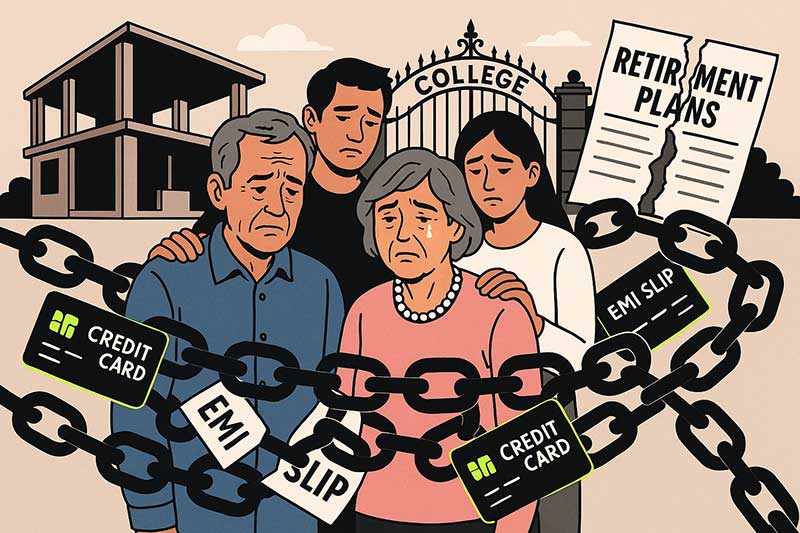
The middle-class dream—owning a home, giving kids a better future, retiring with dignity—will slip further away if nothing changes.
💔 “If we don’t change our spending habits today, tomorrow may not give us a second chance.”
#Overspending #FOMO #DebtTrap #LivingPaycheckToPaycheck #LifestyleDebt #StopOverspending #ThinkBeforeYouSpend #FinancialFreedom #MoneyStruggles #StressFreeLiving
Question for you?
Do you spend to impress others, or for your own happiness? Be honest—your answer may reveal more than you think.